This guide is about the best QNAP for virtualization projects in a small business…
So if you’re building or supporting a virtual infrastructure for a small business then you know storage is something you can’t get enough of – you need lots of storage…
For years businesses have been trying to leverage their existing storage platforms as storage pools for VMware ESXi, Microsoft Hyper-V, and Citrix Xen.
This works really well, up until the point where it doesn’t work anymore and then everything running on the SAN or NAS comes to a screaming halt.
I’ve been participating in the virtualization trends for a while and it seems like every year there’s a new storage vendor that jumps up and says “we have figured it out!” only to be quickly replaced the next year by someone else.
Best QNAP for Virtualization

- Storage Expansion for your QNAP NAS, computers...
- Rackmount JBOD Storage Enclosure
- 12 x 3.5-inch SATA 6Gb/s
- 250W Redundant Power Supply Unit
- 1 x USB 3.2 Gen 2(10Gbps) Type-C


- 12-bay 2U rackmount USB JBOD expansion enclosure...
- Offers twelve 3.5-inch SATA drive bays and...
- 1 x USB 4 40Gbps Type-C host interface enables...
- Compatible with USB 4, Thunderbolt 3, and...
- Redundant 250W power supplies and rackmount design...

- AnnapurnaLabs Alpine AL324 64-bit ARM Cortex-A...
- 4GB UDIMM DDR4 RAM (MAX 16GB)
- 8 x 3.5-inch SATA 6Gb/s, 3Gb/s (Diskless)
- 2 X 2.5 Gigabit Ethernet Ports
- 2 X 10 Gigabit Ethernet SFP+ Ports

- AMD Ryzen Embedded V1500B quad-core 2.2 GHz...
- 8GB UDIMM DDR4 (Max 32GB)
- 12 x 3.5-inch drive bays (Diskless)
- 2 x 2.5GbE ports
- 2 x PCIe Gen3 x4 slots

- Mini-SAS HD (SFF-8644) 1 x 2 (in, out)
- Supports 16 x 3.5-/SATA 6Gb/s Drives.
- Flexibly and economically expand the storage space...
- Redundant Power Supplies, Ensures service...
- The space-efficient short depth design makes it...
- AnnapurnaLabs Alpine AL324 64-bit ARM Cortex-A...
- 4GB UDIMM DDR4 RAM (MAX 16GB)
- 8 x 3.5-inch SATA 6Gb/s, 3Gb/s (Diskless)
- 2 X 2.5 Gigabit Ethernet Ports
- 2 X 10 Gigabit Ethernet SFP+ Ports

- ULTIMATE SPEED - Experience unparalleled data...
- ROBUST RELIABILITY - Powered by an AMD Ryzen...
- MASSIVE CAPACITY - Supports 12x 3.5" SATA 6Gb/s...
- ENHANCED COMPATIBILITY - Versatile drive...
- ADVANCED SECURITY - Features AES-NI encryption...

- Two 10GbE SFP+ and Two 2.5 GbE RJ45 Network Ports
- AnnapurnaLabs Alpine AL324 64-bit ARM Cortex-A...
- 2GB UDIMM DDR4 RAM (MAX 16GB)
- 1 X PCIe Gen 2 x2, 4 X USB 3.2 Gen 1 port

- Intel Xeon E-2334 4C/8T 3.4GHz processor, burst up...
- 16GB or 32GB Long-DIMM DDR4 ECC RAM and upgradable...
- 12 x 3.5 Inch SATA 6Gb/s, 3Gb/s drives in the...
- Dual 10GBASE-T port and Dual 2.5GbE RJ...
- PCIe Gen 4 slots allow for installing additional...

- Intel Celeron N5105/N5095 4C/4T burst up to...
- Dual 2.5GbE (2.5G/1G/100M) ports accelerates file...
- Dual M.2 PCIe Gen 3 x1 NVMe SSD slots enable cache...
- Multiple USB 3.2 Gen 2 ports (type-A) with up to...
- 4K media playback and real-time transcoding...
Here’s The Truth
All virtual infrastructures need these 4 items:
- A good network via iSCSI, NFC, or FC (1G, 10G, 4G, or 8G). It doesn’t matter as long as it’s dedicated as a storage network.
- A solid and consistent configuration from server NIC/HBA to the HBA/NIC on the NAS or SAN. This means there is no mismatching with MTU or other inconsistent network configs.
- RAW storage is presented in bulk via LUNs to the host that is dedicated to virtualization on the back-end.
- Approximately 30 – 50 IOPS per virtual server with enough performance overhead to allow for jobs to run without creating more than 15ms of storage IO latency.
In the perfect world, this would be all you require to keep your virtual server running at optimum performance, as long as they were not constrained by CPU or memory issues. But that’s another issue altogether…
At WhiteboxStorage.com we have a solution that fits the category of the “Best Storage for Virtualization”.
And, it’s low cost and highly customizable, which is why we classify it as ‘white box’.
Let’s take a look at what QNAP offers and then let me know what you think?
Best QNAP Storage for Virtualization
The Turbo vNAS supports iSCSI & NFS protocols and is virtualization-ready with compatibility for VMware®, Citrix®, and Microsoft® Hyper-V to provide businesses with powerful & flexible storage solutions for virtualization applications.
Virtualization Ready
The Turbo vNAS supports iSCSI & NFS protocols and is virtualization-ready with compatibility for VMware®, Citrix®, and Microsoft® Hyper-V to provide businesses with powerful & flexible storage solutions for virtualization applications.
vSphere Plug-in Support
The vSphere plug-in allows users to manage the QNAP Turbo vNAS directly on the vSphere client, making datastore management more effective.
VAAI/Hyper-V Plug-in Support
Use the free QNAP vSphere Client plug-in and QNAP SMI-S provider for SCVMM and managing the Turbo vNAS from the virtualization management client console is easy.
Secure and flexible storage utilization
The Turbo vNAS offers flexible management through creating and allocating iSCSI LUN (Logical Unit Numbers), mapping and unmapping LUNs to and from iSCSI targets, and thin provisioning. CHAP authentication and LUN masking support reinforce secured deployment in virtualization applications.
VAAI for iSCSI, VAAI for NAS
The Turbo vNAS supports VMware VAAI for iSCSI and VAAI for NAS. Businesses can select either iSCSI or NFS as a centralized storage to boost performance. VAAI for iSCSI supports Full Copy (hardware-assisted copy), Block Zeroing (hardware-assisted zeroing), Hardware-assisted Locking, and Thin Provisioning with space reclaim. VAAI for NAS supports Full File Clone, Extended Statistics, and Reserve Space. The QNAP Turbo vNAS supports VAAI iSCSI and VAAI NAS to enhance storage performance in a virtualized environment.
Storage for Microsoft Hyper-V
With ODX support, the QNAP Turbo vNAS becomes a high-performance iSCSI solution under Windows Server 2012, including Hyper-V virtualized environments. QNAP storage enables full copies of virtual machines within the NAS without requiring the Windows hosts to read and write the data to highly reduce the load on Windows hosts and improving the performance of copy & move operations on Windows 2012 hosts. When providing QNAP storage to a Windows 2012 file server, the end-user using a Windows 8 client workstation will also benefit from the Offloaded copy process for large file transfers.
NAS management via SCVMM
QNAP SMI-S enables management of the QNAP Turbo vNAS directly through Microsoft System Center Virtual Machine Manager 2012 (SCVMM).
NAS/IP SAN Unified Storage
QTS supports NFS and iSCSI/IP-SAN storage solutions that can be utilized as network-shared storage of virtualized environments, helping to achieve an efficient cost-saving, energy-saving optimized storage capacity.
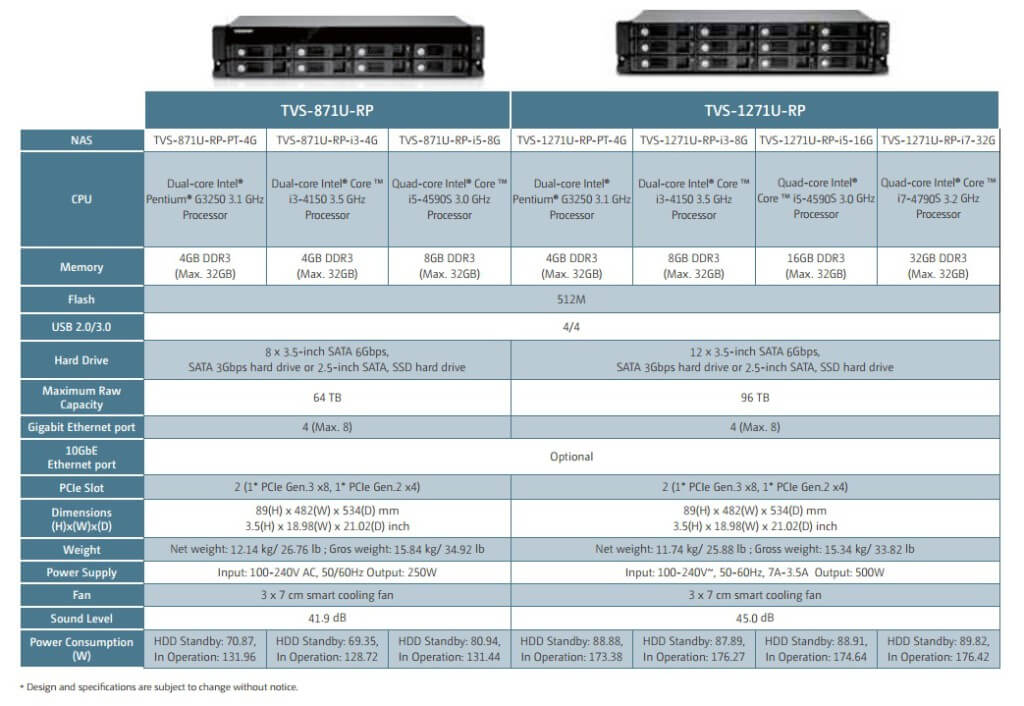 What do you think?
QNAP supports major hypervisors from VMware, Citrix, and Microsoft. And if you dig in deeper, there are also ways to use it as Object-Oriented Storage for OpenStack.
So you’re probably wondering where the gotcha is right? No problem, I would be concerned about it also. For me, there are only 2 that really need to be worked around.
- First off, there’s no redundancy if a unit fails. (This can be a workaround by having good backups.)
- And there’s no block-level snapshots/replication. (This can also be worked around depending on the use case.)
For non-production or lab environments this is a no-brainer. Even running with all SSD storage, you’re still going to be <50% lower cost than a BIG brand – figure .50 -.70 per GB versus $2 – 3.
QNAP is definitely worth a POC to prove it is the BEST storage option for virtualization that won’t break the bank or your budget…
You can find more information about the best QNAP for virtualization by reading this Ref: QNAP PDF document.

